

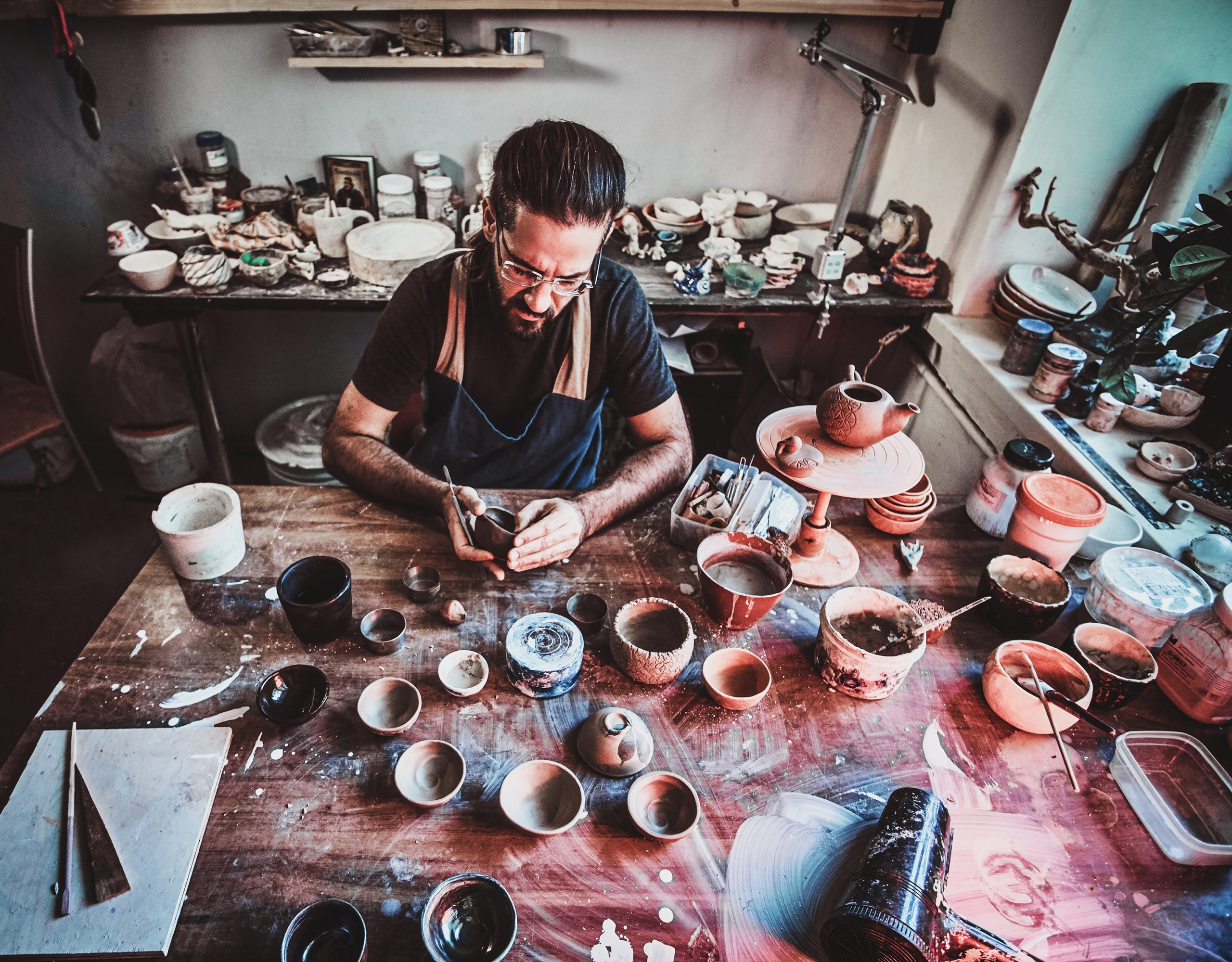
Multan is often called the City of Saints, but its soul also resides in the hands of its artisans—those who craft beauty from earth, water, and fire. Among its many traditional crafts, blue pottery stands out as a symbol of heritage, creativity, and timeless elegance. But behind every intricate piece lies a story—of generations, of passion, of clay molded by the hands of true artists.
The Legacy of Blue Pottery in Multan
Blue pottery in Pakistan, particularly in Multan, traces its roots to Persian and Central Asian influences. The art form flourished in the Indian subcontinent during the Mughal era, and Multan became its most prominent hub. Known for its signature cobalt blue color, delicate white motifs, and floral designs, Multani blue pottery represents a fusion of aesthetics and identity.
But it’s more than just pottery. It’s a narrative of a city that breathes art and a community that preserves tradition through generations.

The Faces Behind the Craft
The real magic happens in small, sun-drenched workshops across the old city. Here, Multani artisans—often from families who’ve practiced the craft for centuries—patiently mold, paint, glaze, and fire every piece by hand.
We met Ustad Farooq, a master craftsman with over 40 years of experience. His fingers, rough from years of kneading clay, delicately trace floral patterns with a brush dipped in cobalt pigment. “This work demands patience and soul,” he says. “It’s not just decoration. It’s history.”
From large vases to mosaic tiles and decorative plates, each item carries the fingerprint of its maker—no two pieces are ever truly alike.

Why Handmade Still Matters
In a world dominated by machines and mass production, the commitment of Multani artisans to handmade crafts stands as a quiet rebellion. Each piece of blue pottery is not only beautiful, but it also represents:
- Cultural continuity – Techniques passed down through oral tradition.
- Sustainable production – Made from natural clay, glazes, and dyes.
- Community livelihood – Providing income to thousands of families.
Buying these pieces isn’t just acquiring decor: it’s supporting a tradition and the people who guard it.
The Global Appeal of Multani Pottery
Today, Multani blue pottery is making its way into global homes, galleries, and concept stores. Its appeal lies in its authenticity, charm, and the story it tells. International design enthusiasts are rediscovering its value—not just as a cultural artifact, but as a contemporary art form that blends seamlessly with modern interiors.
Preserving the Craft for the Future
Despite its beauty and heritage, blue pottery faces challenges: rising material costs, competition from cheap imitations, and a lack of modern training resources. But efforts are underway. Local NGOs, art councils, and platforms like ours are working to give these artisans the visibility and support they need.
As consumers, we play a role too. Every purchase, every share on social media, every visit to Multan contributes to keeping this ancient art alive.
Closing Thoughts
Multani blue pottery is more than a decorative item—it’s a vessel of stories, dreams, and culture. When you hold one in your hand, you’re not just touching clay; you’re connecting with centuries of craftsmanship, dedication, and pride.
So the next time you see that vibrant blue plate or tile, take a moment to appreciate the artisan behind the art—for it is their hands that keep tradition alive.


